

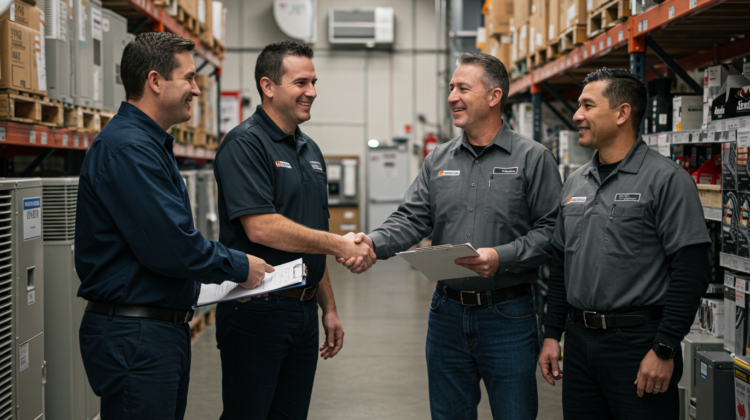
HVAC distributor loyalty runs deep. Many wholesalers proudly carry the same manufacturer lines they brought on decades ago—often through multiple ownership changes, economic cycles, and market shifts. These long-term relationships are built on trust, shared growth, and mutual dependence. In an industry where reliability matters and failures are costly, loyalty feels not just admirable, but necessary.
However, when loyalty is based primarily on longevity rather than ongoing performance, it can quietly turn into a strategic weakness. As HVAC/R technology evolves, regulatory pressures increase, and contractor expectations change, blind loyalty to legacy product lines can limit growth, compress margins, and put distributors out of sync with the market.
This article explores the dangers of wholesalers defaulting to “what we’ve always carried” and outlines specific, practical actions a manufacturer’s rep can take to help distributors objectively evaluate unfamiliar product lines.
The Comfort Zone of Legacy HVAC/R Lines
In HVAC/R distribution, legacy lines often feel irreplaceable. They’ve been specified on countless jobs, installed by generations of contractors, and supported by well-established internal processes. Counter staff know the SKUs by memory. Salespeople know how to defend the line. Warranty procedures, pricing structures, and rebates are familiar.
This comfort creates a powerful inertia. Over time, distributors may stop asking hard questions:
- Is this equipment or component still competitive in efficiency, features, and price?
- Are contractors asking for alternatives that we don’t stock?
- Have margins eroded while operational complexity increased?
- Is the manufacturer innovating, or simply maintaining?
When these questions go unasked, the distributor isn’t choosing the best line—they’re choosing the least disruptive one. [ADD INTERNAL LINK: related HVACRtrends article on distributor line card strategy]
Why HVAC Distributor Loyalty Can Work Against You
Few industries have changed as quickly as HVAC/R in recent years. A2L refrigerant transitions, SEER2 efficiency standards, smart controls, inverter technology, and labor shortages have all reshaped contractor needs.
New and emerging manufacturers often design their product lines specifically around these changes:
- Equipment engineered for easier installation with fewer callbacks.
- Controls designed for modern diagnostics and connectivity.
- Components optimized for new refrigerants.
- More aggressive margin structures to win distribution.
When a wholesaler refuses to consider unfamiliar lines, they risk missing opportunities to:
- Increase gross margin.
- Differentiate from competing distributors.
- Solve contractor pain points faster than legacy suppliers can.
Distributors who embrace new lines early often become the go-to source for contractors looking to stay ahead of code changes and technology shifts.
Losing Alignment with HVAC/R Contractors
Contractor loyalty is pragmatic, not emotional. Contractors care about uptime, availability, install speed, price, and service support. They are increasingly willing to switch brands if it helps them win bids, reduce labor hours, or comply with regulations.
When a distributor insists on pushing a legacy HVAC/R line that no longer fits these contractor realities, consequences follow:
- Contractors source specialty items from competitors.
- Salespeople lose credibility by defending outdated offerings.
- The distributor becomes a warehouse instead of a solutions partner.
Ironically, unwavering loyalty to a manufacturer can erode loyalty from the contractor base—the very customers the distributor exists to serve. [ADD INTERNAL LINK: related HVACRtrends article on contractor relationships]
Why HVAC/R Wholesalers Resist New Lines
From the distributor’s perspective, resistance is rational. HVAC/R products carry real risk:
- Equipment failures damage reputation.
- Warranty issues strain counter staff and service departments.
- Training takes time in an already understaffed environment.
- Dead inventory is expensive and hard to move.
The problem isn’t caution around new products—it’s automatic dismissal. When unfamiliarity alone becomes the deciding factor, distributors trade informed decision-making for habit.
This is where a skilled HVAC/R rep can make a difference. Understanding the psychology behind HVAC distributor loyalty is the first step toward changing the conversation.
What a Top Performing HVAC/R Rep Can Do to Break Loyalty-Based Resistance
Introducing a new HVAC/R product line requires more than enthusiasm. It requires preparation, respect, and a clear understanding of distributor risk. Below are specific actions reps can take to get real consideration for new products—not just a polite rejection.
1. Speak the Language of Margin and Inventory Turns
HVAC/R distributors care deeply about gross margin dollars, inventory turns, and warranty exposure. A rep should arrive with hard comparisons:
- Margin differences versus current lines.
- Turn rates at similar HVAC/R distributors.
- Failure and return data.
- Freight and packaging efficiencies.
Facts cut through emotion faster than “market ready” product claims.
2. Position the Line as a Solution to Specific HVAC/R Gaps
Rather than proposing a wholesale replacement of a legacy line, identify targeted gaps:
- Entry-level equipment for price-sensitive bids.
- High-efficiency options for rebate-driven markets.
- Components designed for A2L readiness.
- Faster-availability SKUs during peak season shortages.
This reframes the conversation from “replace what we trust” to “solve what’s missing.”
3. Bring Contractor Demand to the Table
Nothing moves an HVAC/R wholesaler faster than contractor pull-through. Effective reps bring:
- Testimonials from contractors already using the line.
- Feedback from technicians about install ease or reduced callbacks.
- Evidence of contractors switching distributors to access similar products.
When decision-makers hear, “Your competitors are winning contractors with this,” the conversation changes.
4. Reduce Risk with Structured Trial Programs
Fear of being stuck with unsellable inventory is real. Reps can counter this with:
- Limited SKU launches.
- Test branches or pilot markets.
- Buy-back or stock protection agreements.
- Seasonal programs aligned with cooling or heating demand.
A controlled trial transforms a theoretical risk into measurable results.
5. Commit to Training and Field Support
HVAC/R distributors are already stretched thin. Reps must clearly demonstrate support beyond the initial order:
- Counter and sales training sessions.
- Joint contractor calls.
- Start-up and troubleshooting assistance.
- Marketing and merchandising materials.
When a distributor sees the rep as an extension of their team, their resistance to change drops.
6. Respect Legacy Relationships
Bad-mouthing a long-time HVAC/R manufacturer almost always backfires. Strong reps acknowledge the value of existing partnerships while making the case that markets evolve and needs change. Respect preserves trust and keeps doors open.
Rethinking HVAC Distributor Loyalty for the Long Haul
The most successful HVAC/R wholesalers aren’t disloyal—they’re adaptive. They honor long-standing relationships while continuously reevaluating whether those lines still meet the needs of contractors and the market. Longevity should earn trust, not exemption from scrutiny.
For HVAC/R reps, success isn’t about attacking loyalty—it’s about guiding distributors toward smarter, fact-based decisions that strengthen their business. Healthy HVAC distributor loyalty is earned through ongoing performance, not inherited from the past. When approached correctly, today’s unfamiliar product line can become tomorrow’s trusted partner—without sacrificing the values that built the relationship in the first place.
If this aligns with what you are seeing in your market, I would like to compare notes. CMG works with manufacturers, distributors, and rep firms who want clearer strategy, stronger channel performance, and better alignment across the field. If you are exploring ways to strengthen your commercial approach, reach out and let’s talk through what you are trying to build.




Leave a Reply Cancel reply