
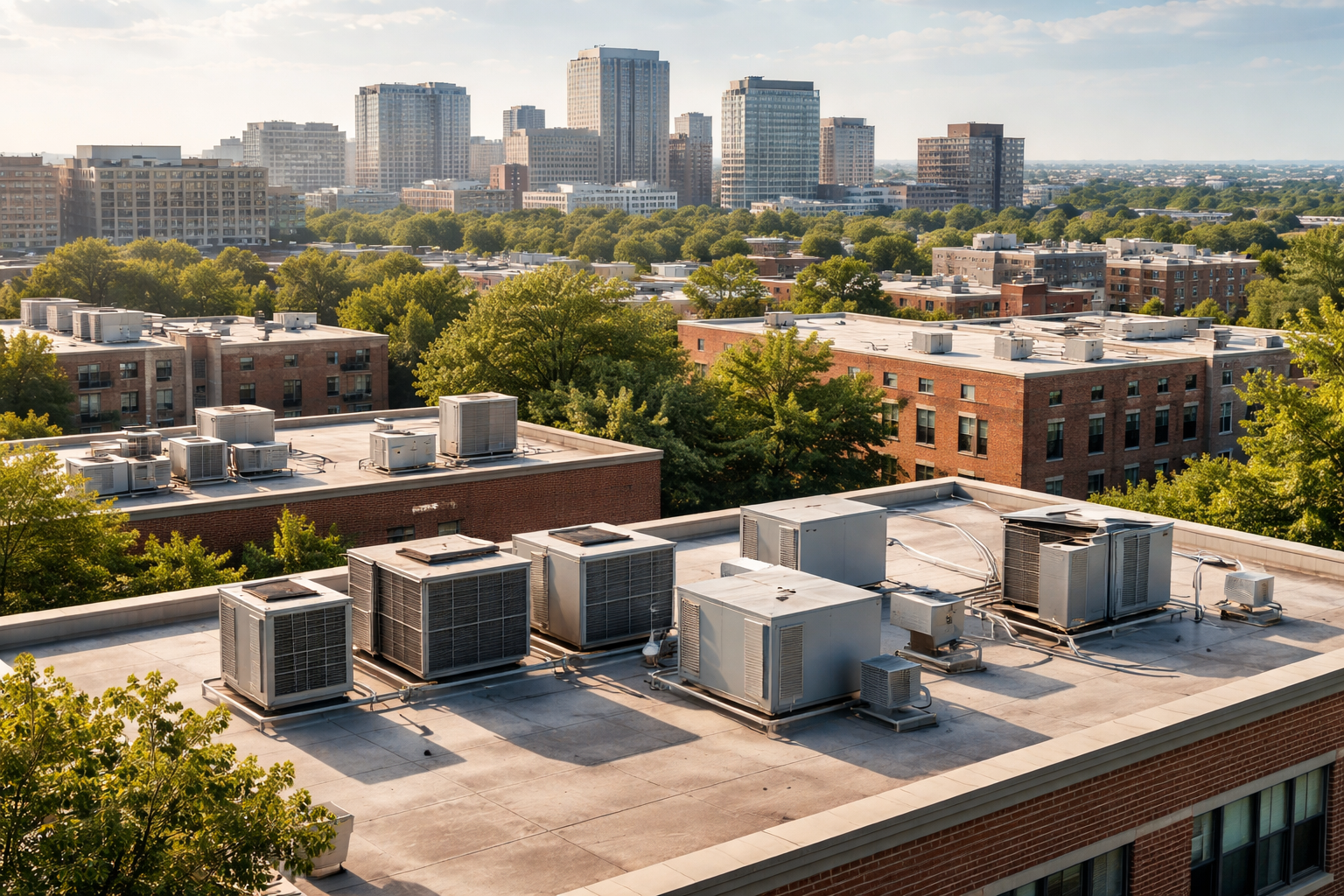
Coming into 2025, most HVACR distributors and manufacturers expected a modest recovery. Interest rates were widely assumed to ease. Deferred residential replacements were expected to return gradually. Nonresidential activity was expected to remain steady enough to provide balance while residential markets found their footing. The HVACR market in 2025 ultimately followed a different path.
Those expectations were reasonable. Inflation had cooled from prior peaks. Supply chains were largely normalized. And while the A2L refrigerant transition introduced complexity, most forecasts treated it as disruption to manage rather than a meaningful drag on demand.
Instead, the market delivered a different outcome.
The HVACR market outlook for 2025 shows that headline sales growth remained positive through much of the year, but underlying demand weakened materially. The disconnect left many distributors asking the same uneasy question: if revenue held up, why did the year feel so constrained?
The answer sits at the intersection of pricing, product mix, weather, and changing consumer behavior.
Executive Summary:
The HVACR market in 2025 delivered positive revenue growth, but the underlying demand picture was far weaker than headline numbers suggested. Unit volumes declined sharply as higher prices, cooler weather, and affordability pressures pushed consumers toward repairs and lower-efficiency equipment instead of full system replacements. Price increases and mix shifts helped stabilize distributor toplines, masking the depth of demand erosion. As the industry looks toward 2026, planning assumptions should reflect constrained demand and evolving buying behavior rather than a simple rebound in unit volume.
What the industry expected entering 2025
Industry expectations entering the year were built on two core assumptions. First, residential demand would stabilize as affordability pressures eased and financing conditions improved. Second, nonresidential construction and retrofit activity would continue to provide a steady baseline of demand.
Those assumptions proved directionally correct but mistimed.
Interest rates stayed higher for longer. Consumer budgets remained under pressure. And while the A2L transition progressed operationally, it introduced enough friction into the replacement decision to delay purchases rather than accelerate them.
What actually happened in the HVACR market in 2025
At a headline level, the HVACR market did grow. Distributor revenues remained modestly positive, extending a multi-year trend of low single-digit sales growth.
Beneath the surface, unit demand told a different story. Core residential equipment volumes declined even as dollar sales held up. As the year progressed, the gap between revenue performance and underlying demand widened.
This divergence is the defining characteristic of the 2025 HVACR market. Sales numbers suggested stability. Operating conditions suggested strain.
Why the numbers looked better than the reality
Several forces distorted the signal in 2025.
Weather played a role. Cooler temperatures in key months delayed replacement cycles in several regions, compressing seasonal demand and pushing more work into repair rather than replacement.
Pricing mattered as well. Producer prices across major HVACR categories rose steadily through the year, providing topline lift even as unit volumes softened, according to U.S. Bureau of Labor Statistics data. Price increases did not create demand, but they helped preserve revenue.
Most importantly, consumer behavior changed. Faced with higher system costs and ongoing economic uncertainty, many homeowners chose to defer full replacements in favor of repairs or lower-cost options. That shift fundamentally altered the composition of demand.
Together, these factors created the illusion of a healthier market than actually existed.
Repair versus replace became the defining dynamic
Repair versus replacement emerged as the central behavioral shift of 2025.
Contractors stayed busy, but the nature of that work changed. Repair activity absorbed demand that historically would have flowed into full system replacements. Homeowners increasingly chose to extend the life of existing equipment rather than commit to large capital purchases.
From a distributor perspective, this dynamic helped preserve revenue and margin while quietly eroding unit volumes. From a planning perspective, it created a dangerous illusion of demand health.
The work did not disappear. It fragmented.
Fragmented demand behaves differently. It is harder to forecast, more price sensitive, and less likely to support sustained volume recovery without a meaningful change in underlying conditions.
Mix shifted downward, not upward
Another surprise for many market participants was the direction of product mix.
Rather than trading up to higher-efficiency systems, a meaningful share of residential buyers moved downmarket. Lower-efficiency equipment captured a larger portion of unit sales as affordability overtook efficiency as the primary decision driver.
Air-source heat pumps followed a different pattern, influenced by incentives and regional adoption dynamics. Even there, growth was constrained rather than explosive. Incentives softened the impact but did not override broader budget pressure.
The takeaway is not that efficiency lost relevance. It is that price sensitivity reasserted itself more forcefully than many forecasts anticipated.
Cost pressure reinforced the trend
Cost pressure amplified every one of these behaviors. Tariffs, component inflation, and freight costs continued to move through the system in 2025, raising OEM and distributor pricing even as unit demand softened. Tariffs and material costs were part of that pressure, particularly for copper-intensive products, where higher input costs ultimately flowed through to distributor pricing.
Price increases helped mask unit declines in reported revenue, but they also raised the hurdle for replacement decisions at the homeowner level. In effect, the same forces that supported top line stability reinforced repair-first behavior.
What this means for 2026 planning
The lesson from 2025 is not pessimism. It is calibration. The experience of the HVACR market in 2025 makes clear that revenue performance alone is no longer a reliable proxy for demand health.
Distributors and manufacturers should plan for constrained demand, not an automatic rebound. Replacement cycles may remain extended. Repair activity may stay elevated. Product mix may continue to skew toward affordability until financing conditions and consumer confidence materially improve.
That does not mean growth opportunities disappear. It means the drivers of growth have shifted.
Planning models that assume volume recovery without accounting for behavior change risk misreading the market again. The HVACR market outlook heading into 2026 makes one point clear: topline stability does not equal demand health. The distinction matters, and it will matter even more in the year ahead.
Attribution
The market observations in this article reflect industry data and commentary from sources including HARDI, CoMetrics, FieldEdge, and the U.S. Bureau of Labor Statistics, as discussed during recent industry presentations and conferences. Analysis and interpretation are the author’s own.
What to watch next
As distributors and manufacturers plan for 2026, understanding how repair behavior, pricing pressure, and replacement timing continue to evolve will be critical. HVACR Trends will continue tracking these shifts and highlighting what they mean for planning, inventory, and go-to-market decisions across the channel.


Leave a Reply