Bob Allomong is describing something the industry talks about but rarely executes: cooperative supplier networks built on genuine alignment rather than forced partnerships. His perspective sits at the intersection of manufacturers, distributors, and contractors, where integration challenges play out in real time. In this piece, he makes the case for cooperative supplier networks and why the industry needs to move from product-level competition to system-level collaboration.
Building a Cooperative Supplier Network: The Future of HVAC/R Sourcing for Manufacturers’ Reps and Wholesale Distributors
In today’s HVAC/R market, success isn’t driven by a single product or brand. It’s driven by how well systems work together—from equipment and controls to piping, accessories, and service components. Yet much of the HVAC/R supply chain is still organized around individual product competition rather than system-level collaboration.
From a manufacturers’ representative perspective, this disconnect creates unnecessary friction. Contractors are being asked to install more complex systems, meet higher efficiency standards, and navigate refrigerant transitions—all while facing labor shortages and tighter timelines. When suppliers operate with disconnected approaches, contractors are left to solve integration challenges on their own. When suppliers cooperate, projects move faster, perform better, and carry less risk.
The future of HVAC/R sourcing lies in cooperative supplier networks—aligned ecosystems where manufacturers, distributors, and reps work together to deliver integrated solutions instead of disconnected parts.
Why HVAC/R Demands a Cooperative Model
HVAC/R systems are becoming more advanced by design. Variable-speed equipment, smart controls, new low-GWP A2L refrigerants, and tighter installation tolerances leave little room for error. Compatibility is no longer a “nice to have”—it’s essential.
Yet many projects still rely on fragmented sourcing. Equipment comes from one supplier, controls from another, piping accessories from a third, and chemicals or sealants from a fourth. Each brings separate training, documentation, and technical support. The result is confusion at the jobsite and increased risk across the system.
In the field, most failures don’t originate with a single component. They occur at connection points—where materials meet, systems are commissioned, or responsibilities overlap. A cooperative supplier network addresses this reality by aligning manufacturers whose products are designed, tested, and supported to work together in real-world HVAC/R applications.
Reducing Friction at the Distribution Counter
For HVAC/R distributors, brand overlap has become a growing challenge. Competing lines within the same category can complicate counter interactions and slow down sales conversations. Instead of focusing on system performance and customer outcomes, sales teams often wrangle with internal line conflicts.
A cooperative supplier ecosystem simplifies this dynamic. When manufacturers are aligned, distributors can present system-based solutions with confidence. This leads to:
- Faster decision-making at the counter
- Clearer inventory strategies
- Stronger contractor trust
For contractors, reduced brand conflict means faster sourcing, fewer substitutions, and clearer installation guidance—critical advantages in today’s labor-constrained environment.
The Manufacturers’ Rep as System Integrator
Manufacturers’ representatives play a unique role in HVAC/R because we see how products perform beyond the spec sheet. We see what gets installed, what gets substituted, and what leads to callbacks months later.
Leading reps can leverage their position between the manufacturers, distributors, engineers, and contractors to allow them to act as system integrators, not just sales agents. The reps’ responsibility is to help align product lines the way HVAC/R systems are installed and serviced.
That includes the ability to:
- Identify complementary HVAC/R products that naturally work together
- Align manufacturers around shared approaches to efficiency, quality, and code compliance.
- Build bundled solutions that simplify specification and installation.
- Deliver unified training and field support across product categories.
This approach shifts value upstream—solving problems before they show up on the jobsite.
Supporting Refrigerant Transitions and Code Changes
Few challenges highlight the need for supplier cooperation more clearly than the ongoing transition to low-GWP A2Lrefrigerants. New refrigerants bring updated safety requirements, material compatibility considerations, and evolving code interpretations.
Equipment, piping systems, sealants, monitoring devices, and diagnostic & service tools must all work together. A cooperative supplier network ensures that manufacturers are not only compliant individually, but compatible collectively.
From a rep’s perspective, coordinated training and messaging are critical. Contractors need clarity—not conflicting guidance from multiple suppliers. Alignment allows reps to deliver consistent, practical education that accelerates adoption and reduces uncertainty in the field.
From HVAC/R Products to HVAC/R Solutions
The industry is shifting from selling components to delivering solutions. Contractors and engineers increasingly value suppliers who understand how systems perform over their entire lifecycle—from installation and commissioning to service and maintenance.
Cooperative supplier networks make this possible. Joint training sessions, coordinated jobsite support, and shared technical resources create a more seamless experience for contractors and distributors alike.
For manufacturers, participation in such an ecosystem increases specification confidence and long-term loyalty. For distributors, it strengthens relationships. For contractors, it reduces risk—and in today’s HVAC/R world, reduced risk often equates to higher profitability.
Collaboration as a Competitive Advantage
There’s a common misconception that collaboration weakens competitive positioning. Cooperation actually creates “stickier,” integrated relationships” that are harder to displace. Ecosystems built on trust, performance, and shared success ultimately outperform isolated product placement strategies.
From the manufacturers’ rep vantage point, collaboration also improves market intelligence. It reveals trends earlier, identifies product gaps faster, and provides direct feedback from the field. When shared, these insights help manufacturers innovate more effectively and stay aligned with real-world demand.
Building Cooperative Supplier Networks That Perform
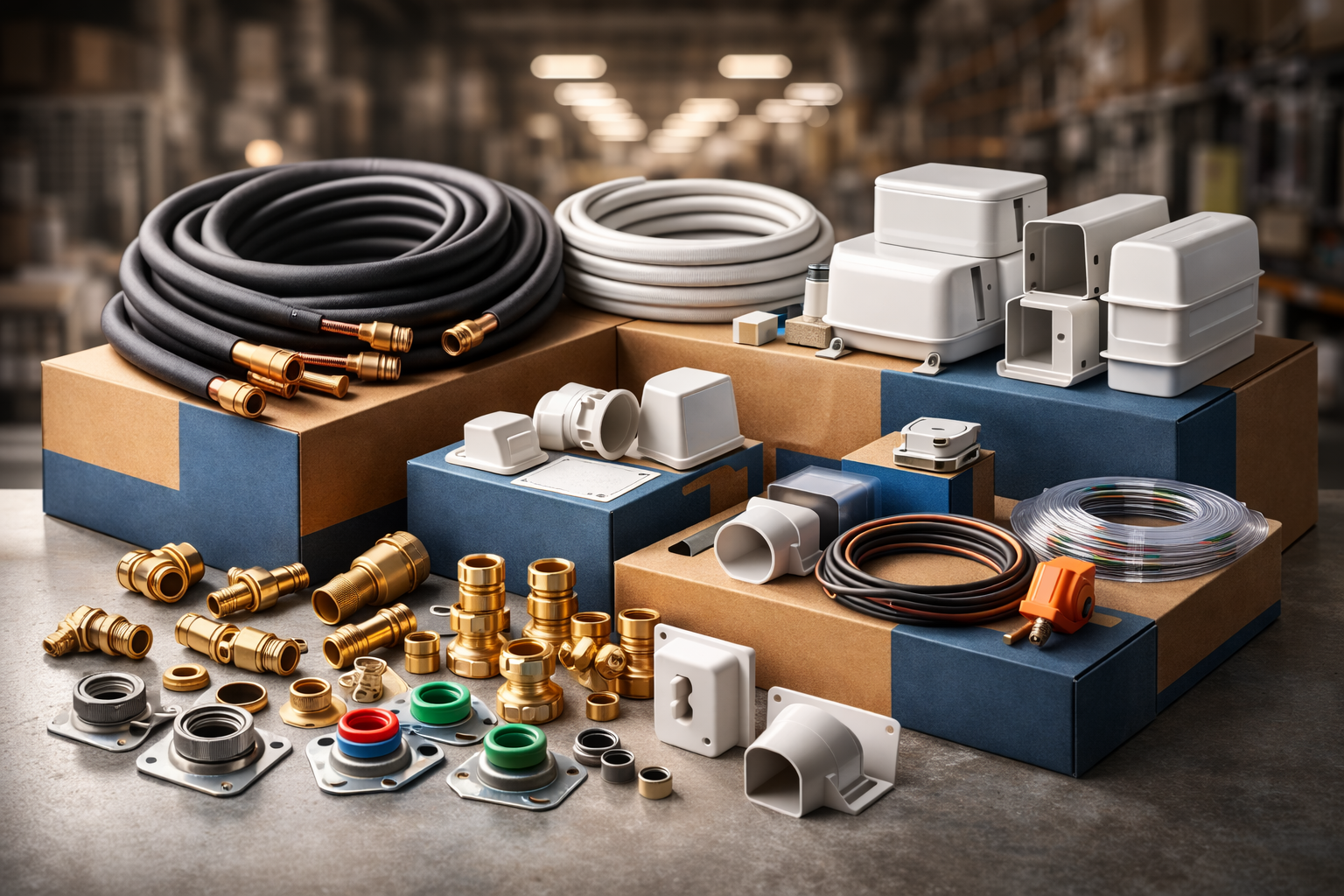
In our agency, we don’t just want to represent individual HVAC/R products—we actively look to curate supplier ecosystems designed to perform in the field. Our focus is on alignment, compatibility, and long-term value for distributors and contractors. We look for products that work together. For instance, in our line sets category, in addition to the copper line sets, we also offer our distributor and contractor partners refrigerant piping penetration outlet seals that are required by code, braze-free fittings to connect the lines to the equipment, and line set covers for a more professional looking installation. We try to focus on a “more complete” solution – one that adds value, works together, and saves everyone time.
As HVAC/R systems grow more complex and expectations continue to rise, the industry must move beyond fragmented sourcing. Systems outperform components. Collaboration outperforms conflict.
The way I see it, the future of HVAC/R sourcing belongs to those willing to build—and lead—cooperative supplier networks. And that can & should start at the manufacturers’ rep level.
About the Author
Bob Allomong is an experienced manufacturers’ sales representative with extensive leadership experience across the HVAC/R and plumbing industries reaching back to the early 1990’s. Bob has worked in each segment of the channel. He has advised manufacturer principals and distribution partners on topics ranging from growth strategy, market entry, channel optimization and product positioning.
In his current sales role with M&M Trades Rep, he operates at the intersection of manufacturers’ product innovation, distributor channel dynamics, and contractor demand – giving him a comprehensive view of how technology and policy translate into real-world product adoption within the skilled construction & repair trades.
As a contributing writer for HVACR Trends, he provides executive-level insight on market direction, competitive forces, and the strategic decisions shaping the future of HVAC/R – especially from the manufacturers’ representative perspective.
Bob is describing something the industry talks about but rarely executes: genuine cooperation among suppliers. The full vision of coordinated ecosystems may be difficult to implement in a channel where manufacturers want maximum distribution, distributors benefit from line conflict, and contractors buy on price and availability. The incentives don’t always line up.
But there’s a practical takeaway buried in his argument that rep firms can act on right now: how they build their line card in the first place.
Are you evaluating manufacturers and their offerings for interoperability with the lines you already represent? Or are you taking lines simply because they were offered? New agencies often grab what’s available to fill out the card and build credibility with distributors and contractors. That’s understandable. But those early decisions are sticky. Over time, an opportunistic line card can become the barrier that makes the integrated approach Bob advocates very difficult or impossible.
This is the difference between strategic intentionality and grab-and-go. The agencies that think about alignment from the beginning will have options later that others won’t.
CMG works with rep agencies that want to step back from the day-to-day and get clear on where they stand, where they’re headed, and how their line card fits the picture. If you’re preparing for growth, navigating a transition, or rethinking how your portfolio holds together, we should talk. Reach out and let’s work through what you’re trying to build.


Leave a Reply